
Software & Integration
Applications and interfaces that carry device events into your ERP, WMS, or system of record instead of leaving them to be re-keyed


Delivered by a Zebra Premier Solution Partner with a dedicated specialization in this discipline.
Overview
Bridge the gap between hardware and business systems with custom software development and integration services. Our team builds tailored applications that connect your devices, automate workflows, and provide real-time visibility across your operations.
The complete system, not just the hardware
The operational problem
The capture hardware produces events the business system cannot accept. Somebody re-keys them, or a nightly file closes the gap, so decisions are made against data that is hours old and partly manual.
- Physical capture
Reads, scans, weights, prints, and confirmations arriving from devices at the point of work.
Integration decides whether a physical event becomes a transaction in seconds or a spreadsheet at the end of the shift. The contract, the field mapping, and the failure behaviour matter more than the transport.
- How it is captured
- Device and application integration
- Hardware at the capture point
- Mobi software
What Mobi does with what was captured
Integrations covers the approved APIs, webhooks, files, and mappings between Mobi and your business systems. Mobi Inventory holds the operational records that the integration reads from and writes to.
- Current limits
- Integrations is Controlled Release and each interface is scoped, tested, and approved for a specific deployment. Customers do not directly change core product code or production data.
- System of record
Where the result has to land
Each interface has a named owner, a documented payload, a retry and error path, and an agreed cutover. Arrowhead builds and tests to that contract before anything is switched on in production.
- Systems this connects to
- ERP · WMS · MES · EAM or CMMS · Business intelligence · Customer applications
- What you provide
- System owners and access, the interface specification or the API, a non-production environment, and the sign-off that the payload matches what the business needs.
- Delivery and lifecycle
Who builds it, who runs it, and who answers when it breaks
- Technical discovery
- Data contract
- Mapping and build
- Test environment validation
- Cutover
- Support boundary handover
What Arrowhead supplies and configures
- Technical discovery with the system and operations owners
- The documented data contract and field mapping
- Build, configuration, and error handling
- Validation against a non-production environment
- Cutover support and a documented support boundary
What you provide
- System-of-record owner, credentials, and API or interface documentation
- A non-production environment to test against
- Business rules, including what happens to a rejected record
- Change windows and approval for production cutover
When something stops working
Arrowhead owns the interfaces it builds and the Mobi side of them. The customer's system owner keeps the system of record. The support boundary between the two is written down at handover rather than discovered during an incident.
What the proof actually shows
Every claim below is labeled with who produced it. Arrowhead delivering a system, a vendor publishing a result from another partner's deployment, a credential a third party issued us, software we run ourselves, a capability we offer, and a direction we have not shipped are different things, and they are labeled differently.
- Arrowhead-delivered result
RFID data delivered into Curtiss-Wright's business intelligence tooling through APIs.
Part of the system Arrowhead delivered with Xemelgo and Zebra Technologies; the tracking software was Xemelgo. Result published by Zebra Technologies.
See the detail - General capability
Every interface is scoped, mapped, and tested in a non-production environment before cutover.
This is Arrowhead's standard integration practice on Controlled Release deployments, not a customer-specific outcome.
See the detail - Future direction
Customer-composed automation inside Mobi.
Governed Extensions is Controlled Release for approved deployments. Compose and Extend remain future direction, with self-serve review, versioning, and support still to be defined.
See the detail
What this solution covers
- Custom mobile application development (Android, iOS, Windows)
- Web-based dashboards and reporting portals
- RFID middleware and device integration
- Printer driver development and integration
- ERP/WMS/TMS integration (SAP, Oracle, Manhattan, etc.)
- REST API development and microservices
Expected outcomes
- Automate workflows
- Connect systems
- Real-time visibility
- Reduce manual entry
Industries we serve
- ManufacturingMES integration, production tracking, quality systems
- WarehousingWMS integration, mobile picking apps, dock automation
- HealthcareEMR integration, specimen tracking, asset management
- RetailPOS integration, inventory apps, clienteling tools
- LogisticsTMS integration, route optimization, proof of delivery
Common Use Cases
Device integration
Connect scanners, printers, and RFID readers to your business systems so captured data flows without manual entry.
Custom mobile apps
Purpose-built Android, iOS, and Windows applications that match your exact workflow instead of forcing a compromise.
ERP/WMS integration
Bridge devices to SAP, Oracle, Manhattan, and other platforms for real-time, accurate operational data.
Dashboard and reporting
Web dashboards and reporting portals that turn device and sensor data into visibility leaders can act on.
Frequently Asked Questions
Recommended Hardware & Supplies
Shop our curated collections for this solution
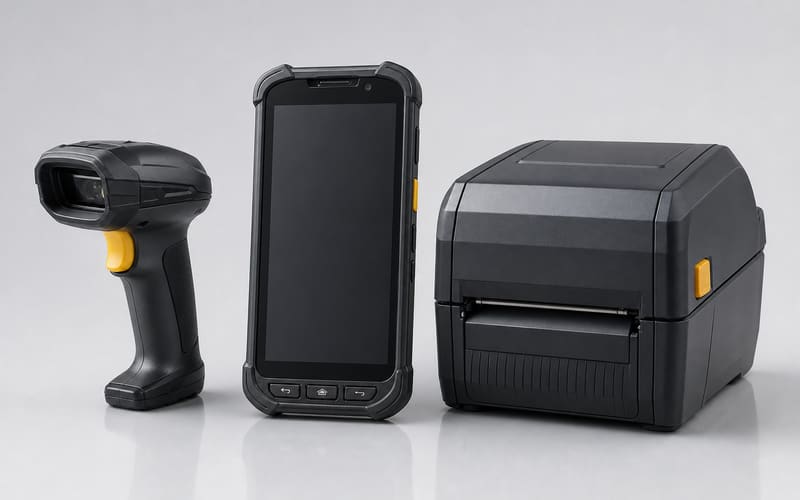
Software & Integration Hardware
Enterprise-grade equipment for your deployment
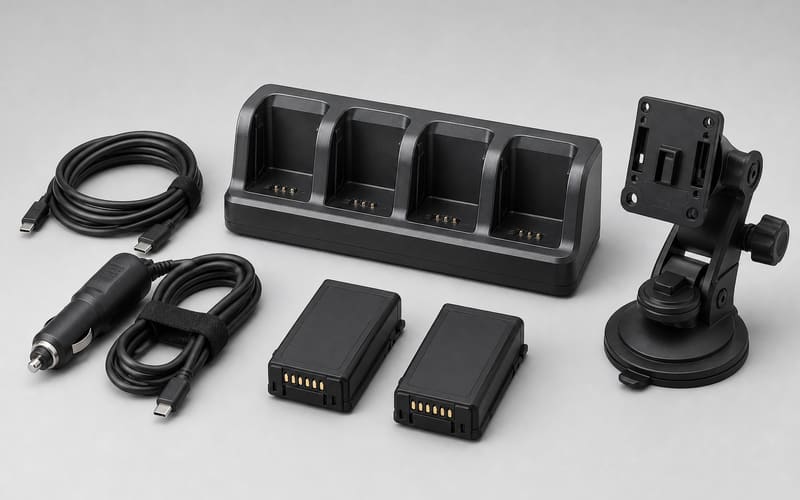
Accessories & Parts
Cables, mounts, batteries, and replacement parts

Labels & Supplies
Consumables and supplies for ongoing operations
What to do next
Bring the system of record, the events you need to capture, and who owns the interface. Discovery produces the data contract before anyone writes code.
Plan technical discoveryRelated on this site
Planning software & integration?