
Inventory accuracy that powers every channel.
Customers expect the item to be in stock, online to match the shelf, and pickup to just work. Arrowhead brings RFID and mobile technology to the store floor so associates can find inventory, fulfill omnichannel orders, and serve customers without leaving the aisle. From cycle counts to BOPIS, the right devices turn associates into a connected, productive team.
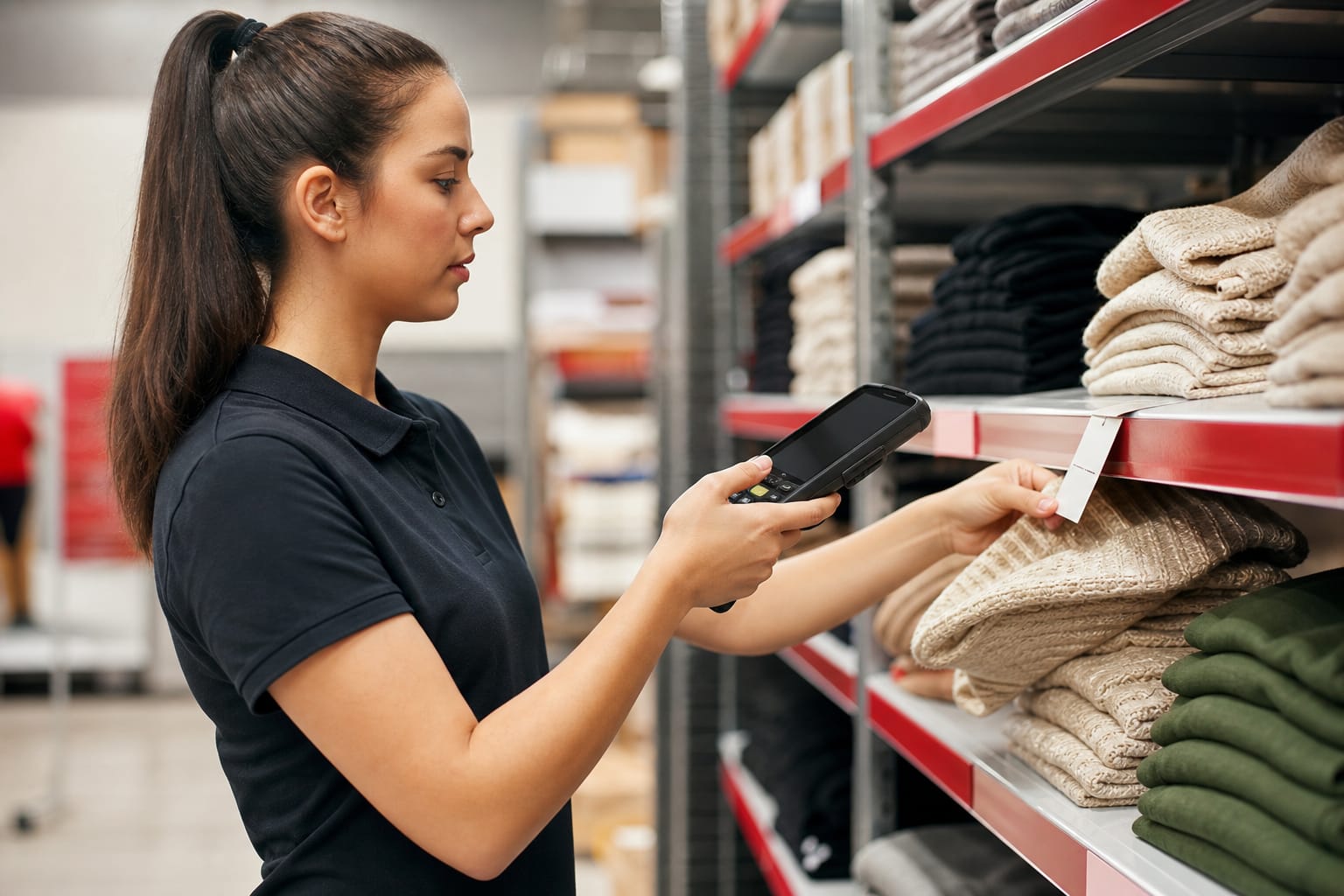
Where the record gets created in retail
The system says the item is in the store and the customer cannot find it. Online orders are cancelled from stores that hold the stock, and every count is too slow to run often enough to fix it.
Salesfloor and backroom cycle counting
- What physically happens
- An associate walks the fixtures and the backroom with a handheld reader.
- What is captured
- Item-level RFID tags are read through packaging and fixtures, so a full count takes a fraction of a barcode count and can run weekly.
- What Mobi does with it
- Mobi Inventory records the count, the variance, and the exception list for the store inside the approved deployment.
- Where the result lands
- The retail ERP or inventory system receives the adjusted on-hand position.
Omnichannel picking and collection
- What physically happens
- An online order is picked from the salesfloor for collection or shipment.
- What is captured
- The associate locates the unit with an RFID reader and scan-verifies it into the order before it leaves the floor.
- What Mobi does with it
- Mobi Inventory confirms the unit exists and reflects the pick against store stock.
- Where the result lands
- The order management system owns the order state and the customer promise.
Receiving verification at the store
- What physically happens
- A delivery arrives and is checked in at the back door.
- What is captured
- Cartons are read in bulk against the advance shipping notice instead of opened and scanned one item at a time.
- What Mobi does with it
- Mobi Inventory records the receipt and raises what is missing or unexpected.
- Where the result lands
- The retail ERP posts the receipt and closes the shipment.
Shelf edge and price label printing
- What physically happens
- Price or promotion changes have to appear on the fixture the same day.
- What is captured
- Labels are printed in the store from the current price file and applied against a verified list.
- What Mobi does with it
- Print Studio holds the shelf-edge label formats; Mobi Print supports printing from mobile devices to supported Zebra printers.
- Where the result lands
- The pricing system owns the price; the store confirms application.
What the equipment has to survive here
- Dense apparel and fixture layouts create tag-to-tag interference that has to be designed around
- Item-level tag cost has to be justified per category, not per chain
- Associates turn over seasonally, so the workflow has to be learnable in a shift
- Store networks and back office equipment vary between locations
- Anything on the salesfloor happens in front of customers
The system behind those workflows
- Physical capture
Tagged units are read in bulk on the salesfloor, in the backroom, or at the back door.
Retail RFID works because a reader sees hundreds of units in seconds without opening a box or facing a barcode. What decides success is tag placement per category and a count routine an associate can actually complete.
- How it is captured
- Item-level passive UHF RFID with barcode scanning at the register and the bench
- Hardware at the capture point
- RFID sleds and handheld readers — Count fixtures and locate single units on the salesfloor (opens the Arrowhead store in a new tab)
- Associate mobile computers — Run counts, fulfillment, and lookups from the aisle (opens the Arrowhead store in a new tab)
- Desktop and shelf-edge printers — Print price, promotion, and shipping labels in the store (opens the Arrowhead store in a new tab)
- Wearables for backroom fulfillment — Keep hands free while picking and packing store-fulfilled orders (opens the Arrowhead store in a new tab)
- Mobi software
What Mobi does with what was captured
Mobi Inventory records counts, receipts, and variances per store. Print Studio and Mobi Print cover the shelf-edge and shipping labels the store produces.
- Current limits
- Mobi Inventory is available today and is approved store by store. Chain-wide multi-facility stock balances are not a generally available capability, and the order promise stays in the customer's order management system.
- System of record
Where the result has to land
Count results, receipts, and adjustments are posted to the retail inventory system so the online position and the shelf agree.
- Systems this connects to
- Retail ERP · Order management system · Point of sale · Pricing system
- What you provide
- The inventory and order management interfaces, the tagging program with suppliers, the price file, and the rule for accepting a count adjustment.
- Delivery and lifecycle
Who builds it, who runs it, and who answers when it breaks
- Category and tagging assessment
- Pilot store selection
- Count routine design
- Device staging and store rollout
- Integration and training
- Support across the estate
What Arrowhead supplies and configures
- Tag placement testing by product category
- Count routine and read technique design for a pilot store
- Reader, mobile computer, and printer supply, staged per store
- Rollout scheduling across the estate
- Integration to the inventory and order systems
- Associate training and in-house device repair
What you provide
- Pilot store access and associate time
- The supplier tagging program or a source-tagging plan
- Inventory and order management system interfaces
- The variance threshold that triggers an adjustment
- Store network access and back office space
When something stops working
Arrowhead supports the readers, printers, and devices across the estate and repairs them in-house. Merchandising, pricing, and order promise systems stay with the retailer.
What we deliver for retail
The work Arrowhead scopes, supplies, installs, integrates, and supports for retail operations.
Inventory accuracy & RFID counts
Improve stock accuracy with faster RFID cycle counting.
Omnichannel fulfillment
Power buy-online-pickup-in-store, ship-from-store, and curbside.
Price & shelf management
Print and update labels and verify pricing across the store.
Clienteling & mobile POS
Equip associates to check stock, look up products, and check out anywhere.
Recommended hardware
The gear we deploy for retail—buy it direct from our online store, ArrowheadPHX.
RFID Systems
Handheld and overhead RFID for fast, accurate counts.
Shop RFID SystemsMobile Computers
Associate handhelds for inventory and fulfillment.
Shop Mobile ComputersBarcode Scanners
Checkout and back-room scanning.
Shop Barcode ScannersWearable Computers
Hands-free scanning for fulfillment and receiving.
Shop Wearable ComputersDesktop Printers
Shelf-edge, price, and shipping label printing.
Shop Desktop PrintersLabels & Supplies
Retail labels, tags, and consumables.
Shop Labels & SuppliesChallenges we solve
- Inventory accuracy and visibility
- Loss prevention
- Omnichannel fulfillment
- Store operations efficiency
Recommended solutions
What the proof actually shows
Every claim below is labeled with who produced it. Arrowhead delivering a system, a vendor publishing a result from another partner's deployment, a credential a third party issued us, software we run ourselves, a capability we offer, and a direction we have not shipped are different things, and they are labeled differently.
- Vendor-supported result
Zebra Technologies publishes retail RFID results including Fanatics inventory and checkout.
Delivered by other partners and published by the vendor. Arrowhead did not design, deploy, or support that deployment.
See the detail - General capability
Tag placement and read technique are tested by product category before a chain rollout.
Arrowhead's standard approach to retail RFID pilots; it is not a published customer outcome.
See the detail - Accredited capability
Zebra printers, mobile computers, scanners, and RFID readers are repaired in-house in Chandler, Arizona.
Arrowhead is an authorized Zebra Elite Service Center with Zebra-certified repair technicians. Turnaround depends on model, failure, parts, and coverage.
See the detail
Published case studies in retail
Each card says who delivered the system. A vendor reference is a result another partner delivered and Zebra published; it is not evidence that Arrowhead built it.
Frequently Asked Questions
What to do next
Pick one store and one category. The pilot measures count time and accuracy before anything is committed across the estate.
Scope a pilot storePlanning retail data capture?